
Pre-engineered building systems have become a cornerstone of modern industrial and commercial construction thanks to their speed, cost efficiency, and structural reliability. By utilising factory-fabricated steel components assembled on site, these buildings offer exceptional flexibility, long-term durability, and scalable design solutions. This article provides a comprehensive overview of pre-engineered steel buildings, from key characteristics and structural configurations to construction processes, maintenance strategies, and cost considerations, helping investors and businesses make informed decisions for steel storage building and metal storage building projects while meeting performance and safety requirements such as the fire resistance rating of warehouses and factories.
1. Understanding Pre-Engineered Steel Buildings
Pre-engineered steel buildings are advanced structural solutions built around steel framing systems. These frames are accurately fabricated under factory-controlled conditions and then rapidly erected on-site. This approach guarantees durability, shorter construction timelines, and the ability to expand the facility with ease. Thanks to their standardised yet flexible components, steel storage building solutions can be extensively tailored to meet precise storage demands, improve goods movement efficiency, and perform reliably under diverse climatic conditions.
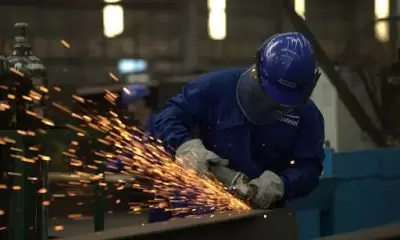
A complete pre-engineered building (PEB/PEMB) system encompasses all essential structural and enclosure elements. This includes the main framing system (columns and rafters), Z and C purlins, metal roofing and wall panels, and a full set of coordinated accessories. Every component is cut, welded, coated, and finished in a controlled manufacturing environment before being transported to site and assembled using bolted connections. This systematic process ensures consistent quality control while significantly reducing construction risks caused by unfavourable weather.
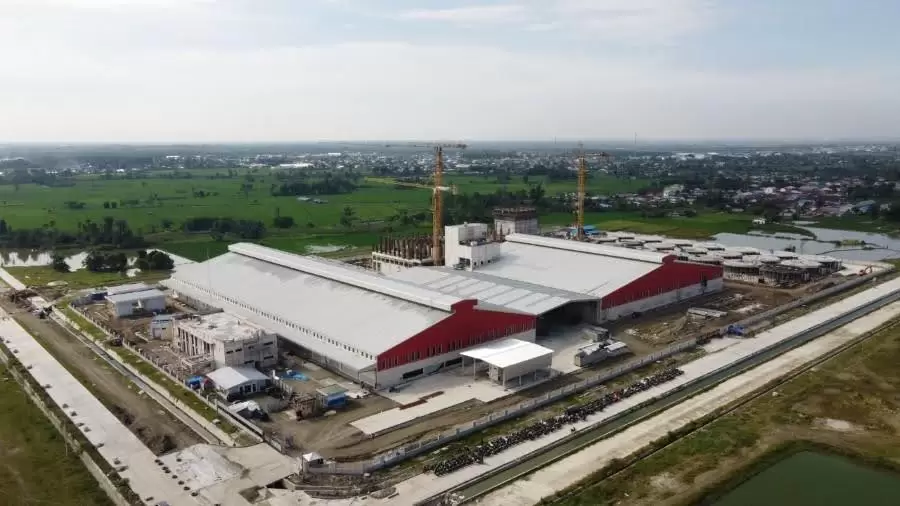
A Pebsteel-designed pre-engineered steel factory currently in operation
2. Core Features and Performance Efficiency of Pre-Engineered Buildings
The most defining attribute of a modern pre-engineered building is its efficient use of space. Clear-span structural designs eliminate the need for internal columns, creating uninterrupted floor areas. This layout is essential for improving forklift movement and optimising loading and unloading activities. Such spatial freedom is especially valuable for any metal storage building accommodating large equipment or high-volume inventories, particularly when combined with wide-span industrial doors.
2.1. Design Adaptability and Expansion Potential
Flexibility is a key advantage of pre-engineered systems. Future expansion is inherently supported, as facilities can be extended by lengthening the structure or increasing eave height with minimal disruption. This scalability enables businesses to respond to growth without interrupting operations.
2.2. Building Envelope and Climate Regulation
The building envelope can be configured to meet varying operational requirements. For basic storage purposes, single-layer metal cladding may suffice. However, facilities that demand environmental control benefit from insulated sandwich panels with PU or Rockwool cores, which deliver superior thermal and acoustic performance. Rockwool insulation also enhances the fire resistance rating of warehouses and factories, helping facilities comply with stringent fire and safety standards while protecting valuable assets.
Additionally, incorporating passive ventilation solutions and natural daylighting systems, such as skylights, reduces dependence on artificial energy sources. Ultimately, the final configuration—whether for a steel storage building or a complex industrial plant—depends on local climate conditions, asset protection requirements, and the balance between initial investment and long-term operating costs.
Pre-engineered buildings (PEB) are distinguished by structural efficiency, adaptable design, and the extensive use of recyclable steel. This combination of flexibility and sustainability has positioned them as a preferred construction solution for progressive enterprises worldwide.

Core Characteristics and Functional Performance
3. Advantages and Limitations of Pre-Engineered Steel Warehouses
A steel storage building offers clear benefits, including long service life, minimal maintenance, fast installation, and high levels of customisation. Nevertheless, ensuring long-term durability requires careful consideration of insulation performance, condensation prevention, waterproof detailing, and corrosion protection appropriate to the site environment.
To present a balanced view, Pebsteel outlines both the strengths and technical considerations involved in constructing a pre-engineered building.
3.1. Benefits
The primary strength of this construction approach lies in its operational efficiency. PEB systems reduce material consumption, lower labour costs, and significantly shorten construction schedules. Standardised fabrication and installation processes also minimise on-site risks.
- Strength and Durability: Steel structures resist termites, withstand harsh weather conditions, and offer long operational lifespans. Flexible customisation of dimensions, colours, and accessories allows these buildings to serve a wide range of industries.
- Operational Efficiency: Clear-span interiors, wide access points, and generous clear heights create optimal conditions for forklifts and transport vehicles. Selecting appropriate spans and door sizes ensures smooth movement of large machinery.
- Cost Efficiency at Scale: As project size increases, the average cost per square metre typically declines due to economies of scale, making large metal storage building projects financially attractive.

Key Benefits and Technical Considerations of Pre-Engineered Steel Buildings
3.2. Considerations (Limitations)
Despite their robustness, steel envelopes demand careful technical execution:
- Environmental Performance: Without adequate insulation or anti-condensation layers, metal cladding can cause condensation and excessive noise during rainfall. Strict adherence to envelope detailing at ridges, eaves, and penetrations is essential to prevent leaks.
- Corrosion Protection: Facilities in coastal or chemically aggressive environments require specialised coatings and disciplined maintenance programmes.
- Regulatory Compliance: All local building codes and permitting requirements must be fully satisfied prior to construction.
While PEBs provide speed, durability, flexibility, and cost efficiency, understanding both their advantages and technical requirements allows investors to fully optimise their value.
4. Categories of Pre-Engineered Steel Warehouses
By classifying pre-engineered building systems according to structural form, functional purpose, or enclosure type, investors can select the most suitable solution for site constraints, material flow, and budget considerations.
4.1. Structural Geometry Classification
The configuration of the steel frame influences both visual appearance and functional performance of a metal storage building.
- Gable Frames (Double Slope): Widely used for large spans and future expansion, making them ideal for general storage.
- Single-Slope Frames: Designed for one-directional drainage, suitable for narrow sites or solar panel integration.
- Multi-Span Frames: Incorporate interior columns to reduce steel weight over wide areas, offering cost efficiency for large logistics hubs.
- Arch/Quonset Structures: Self-supporting forms that enable rapid installation with simplified detailing.
Regardless of configuration, Pebsteel stresses the importance of verifying roof slope, purlin spacing, bracing systems, and watertight detailing at ridges and eaves to preserve envelope integrity.
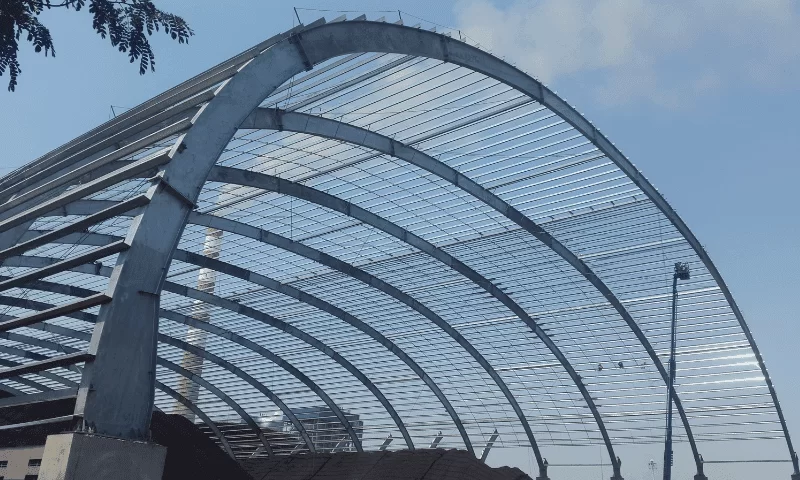
Dome-frame structure constructed by Pebsteel
4.2. Functional Classification
Steel structures are applied across diverse sectors, including industrial (factories and warehouses), commercial (offices and showrooms), infrastructure (stations and stadiums), and residential developments. Each application is engineered to meet specific functional and technical demands.
- Logistics Warehouses: Designed for high-throughput operations, focusing on dock layouts, levellers, shelters, and truck staging zones.
- Cold Storage Facilities: Require thick insulation panels, specialised doors, and rigorous humidity control.
- Self-Storage Buildings: Emphasise modular layouts and secure compartmentalisation.
Unlike manufacturing plants—which demand forced ventilation and heavy-duty foundations—a steel storage building prioritises capacity and circulation efficiency, resulting in lighter structural and MEP requirements with an emphasis on open spans and large access points.
4.3. Enclosure Systems and Access Openings
The enclosure system is vital for weather protection, insulation performance, and durability. Key elements include:
- Cladding Solutions: Single-layer sheets for basic use; PU or Rockwool sandwich panels for thermal, acoustic, and condensation control.
- Waterproofing Systems: Sealants, flashing, ridge caps, trims, and gutters form a critical barrier against leaks.
- Door Solutions: Rolling, sliding, or overhead doors must be selected based on clearance needs and prevailing wind or sun orientation.
4.4. Operational Accessories
Modern warehouses integrate advanced accessories to enhance performance:
- Energy-Saving Features: Skylights, turbine vents, and louvres reduce energy consumption.
- Loading Efficiency: Dock levellers and shelters improve truck turnaround times, especially in cold-chain operations.
- Drainage Systems: Well-designed gutters and downspouts prevent water accumulation and require routine maintenance for longevity.
5. Construction and Installation Process of Pre-Engineered Steel Warehouses
The full lifecycle of a pre-engineered building typically consists of six key stages: site survey and briefing, engineering design, factory fabrication, on-site erection, enclosure completion, and final handover. Throughout each phase, strict compliance with foundation design, site preparation, and regulatory approvals is essential.

Pre-Engineered Steel Building Construction and Installation Process
5.1. Site Assessment and Design Brief
This initial phase includes geotechnical investigation, wind load analysis, floor level assessment, and vehicle circulation studies. It defines core parameters such as span, bay spacing, height, and material flow, forming the basis for frame selection, opening dimensions, and insulation strategy. Applicable standards, functional requirements, timelines, and local regulations must be clearly defined to avoid future complications.
5.2. Engineering Design and Detailing
Structural engineers analyse primary frames, bracing systems, and purlins to ensure stability and serviceability. Connection details and bolt specifications are developed, and comprehensive shop drawings are prepared to minimise installation errors. Concurrently, envelope systems, insulation, condensation control, lighting, and ventilation solutions are finalised based on operational needs and climate conditions.
5.3. Fabrication and Quality Assurance
Steel components undergo cutting, welding, surface treatment, and coating in accordance with stringent standards. Quality control checks confirm the dimensional accuracy, coating thickness, and material traceability. Components are labelled by zone to streamline site handling. Prior to erection, foundations, drainage systems, and crane access routes must be completed.
5.4. On-Site Assembly
During erection, columns and rafters are installed along precise grid lines, with bolts tightened to specified torque values. Purlins, bracing, and envelope components follow in a controlled sequence to achieve full stability. Safety protocols, such as harness use, scaffolding, and wind monitoring, are mandatory. Once the main frame is secure, sealing details at ridges, eaves, and penetrations are installed and inspected immediately.
5.5. Final Enclosure and Accessories
Finishing works include installing ridge caps, trims, gutters, flashing, and downspouts in a systematic order. All joints are sealed to prevent leaks and condensation. Water-tightness testing after initial rainfall is recommended. Operational elements such as doors, dock equipment, lighting, and ventilation systems are then installed and tested to ensure efficient internal logistics.
5.6. Handover, Operation, and Maintenance
The handover package contains inspection checklists, as-built drawings, operation manuals, and maintenance guidelines. Maintaining accurate component records supports efficient future replacement. Routine inspection of roofs, fasteners, coatings, and drainage systems from the outset is essential for long-term performance.
Fire safety compliance during construction is mandatory. Non-compliance may result in severe penalties. The use of materials such as Rockwool panels significantly improves the fire resistance rating of warehouses and factories, enhancing operational safety.
6. Maintenance Practices for Pre-Engineered Steel Warehouses
Consistent maintenance is essential for preserving the integrity of any pre-engineered building. It extends service life, reduces leak risks, and controls operating costs. Five key pillars underpin effective maintenance: regular inspection, coating care, condensation management, ventilation optimisation, and strategic upgrades.
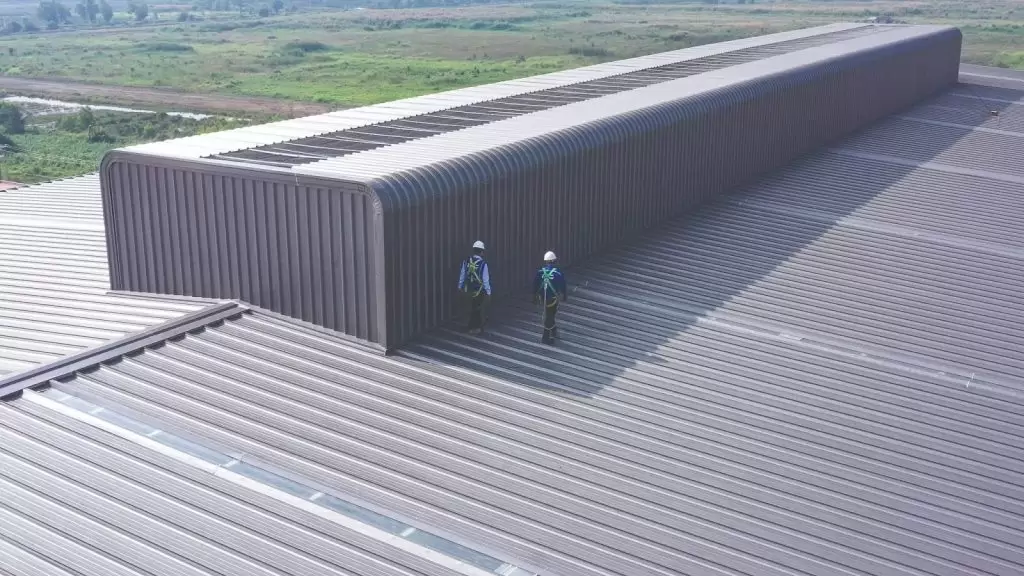
Maintenance Practices for Pre-Engineered Steel Building Systems
6.1. Routine Inspection Programme
Regular inspection of roofing, wall panels, fasteners, seals, and penetrations is crucial. After severe weather events, bolts, trims, and potential leak points should be reassessed. Gutters and downpipes must be cleaned frequently to prevent overflow.
Early identification of issues minimises supply chain disruptions, particularly in steel storage buildings containing moisture-sensitive goods.
6.2. Cleaning and Coating Protection
Removing dust, salt, and contaminants from the building envelope helps prevent corrosion. Any paint damage or surface scratches should be repaired promptly.
Conducting touch-up painting before the rainy season is a proactive strategy.
6.3. Condensation Management and Ventilation
Insulation layers, anti-condensation films, and panel joints require periodic inspection, particularly at ridges and end walls. Enhancing natural ventilation or installing industrial fans helps regulate internal humidity and temperature, especially in hot and humid climates. When upgrading insulation, materials that improve the fire resistance rating of warehouses and factories should be prioritised.
6.4. Retrofitting and Modernisation
A metal storage building offers exceptional adaptability. Facilities can be upgraded by replacing outdated cladding with insulated panels or adding skylights to improve daylighting.
If operational loads increase—such as heavier racking systems or new cranes—the existing structure must be reassessed and reinforced as required. Upgrading dock equipment, high-speed doors, and safety systems can dramatically improve logistics efficiency. Drainage upgrades are recommended in regions with increasing rainfall intensity.
6.5. Maintenance Records and Repainting Cycles
Detailed logs of maintenance activities, materials, and timelines support warranty claims and long-term planning. In coastal environments, strict repainting schedules are essential to maintain durability and appearance.
Consistent maintenance ensures stable operation, minimises downtime, and optimises lifecycle costs.
7. Cost Considerations for Pre-Engineered Steel Warehouses
The cost of a pre-engineered building is influenced by multiple technical variables rather than a fixed rate. Key factors include building dimensions, insulation requirements, number of access points, site location, and foundation and drainage complexity.
Economies of scale play a major role: as project size increases, the average unit cost generally decreases. Investors are therefore encouraged to evaluate total lifecycle costs, balancing initial expenditure with operational and maintenance efficiency.
A factory or steel storage building represents a major long-term asset. Its design affects not only construction budgets but also future productivity and operational flow. For deeper insight into cost structures, reviewing expert analyses on Pre-Engineered Steel Buildings Construction Unit Prices is recommended.
With more than 30 years of experience in designing, manufacturing, and erecting pre-engineered steel buildings and structural steel, Pebsteel is dedicated to providing efficient, durable, and sustainable solutions for clients worldwide.
For comprehensive steel structure construction solutions, contact Pebsteel via email at pebm@pebsteel.com or phone 0939 930 8603 for professional consultation.
*** This article provides general information about the pre-engineered steel and structural steel industry. For project-specific guidance or clarification, please contact Pebsteel directly.